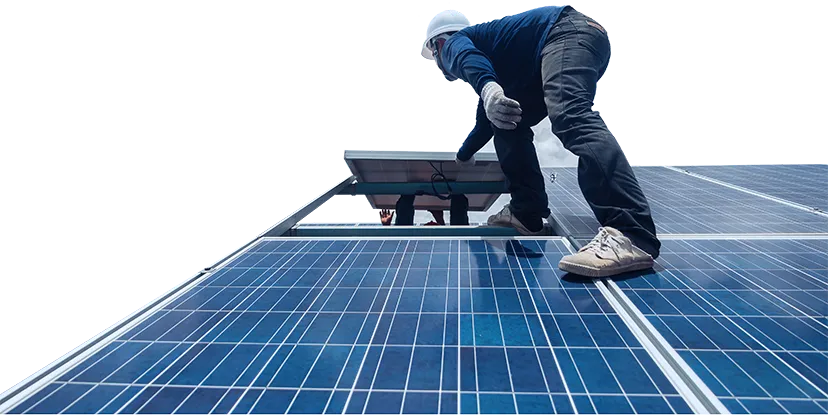
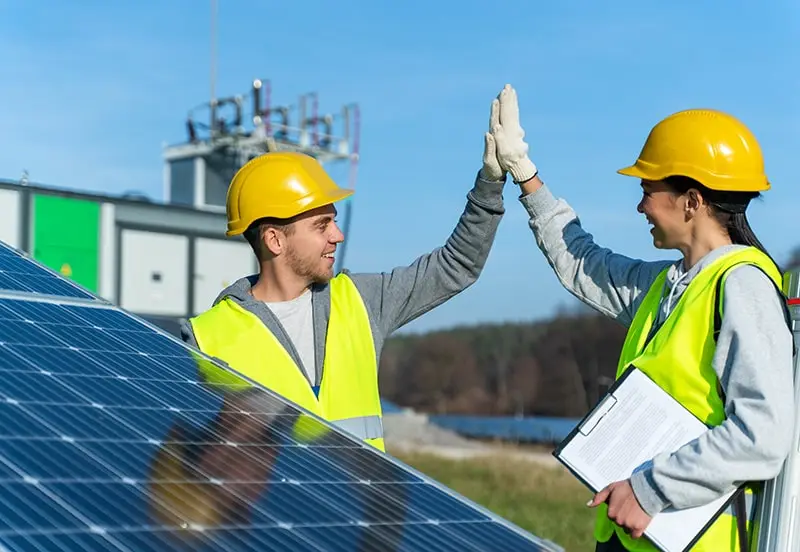
Solar Factory provides professional household solar panel installation services designed to help homeowners generate clean and affordable electricity. With rising electricity costs and increasing awareness of renewable energy, installing a rooftop solar system has become one of the smartest investments for modern homes.
Reliable Household Solar Installation for Clean Energy
Our residential solar solutions are tailored to meet the energy needs of individual households. From system design to installation and grid connection, we deliver complete end-to-end solar installation services that ensure maximum efficiency and long-term savings.
Solar power systems convert sunlight into usable electricity, allowing homeowners to significantly reduce dependence on traditional grid power and lower monthly electricity bills.
Service Process
At Solar Factory, we simplify solar installation through a clear and efficient process that ensures quality, reliability, and customer satisfaction.
Consultation & Site Assessment
System Design & Professional Installation
Testing, Activation & Ongoing Support
What is a household solar power system?
A household solar power system is a rooftop solar setup that converts sunlight into electricity for home use. It typically includes solar panels, an inverter, mounting structures, and sometimes batteries for energy storage.
How much roof space is required for solar panels?
The space required depends on the system size. On average, a 1 kW solar system requires around 80–100 square feet of shadow-free roof area.
How much can I save on electricity bills with solar?
A residential solar system can reduce electricity bills by 50% to 90%, depending on the system size and your household electricity consumption.
Why Choose Solar Factory for Household Solar Installation?
Experienced Solar Professionals
Our team has extensive experience installing residential solar systems with high efficiency and reliability.
Quality Solar Components
We use trusted solar panels, inverters, and mounting structures designed for long-term performance.
End-to-End Service
From consultation and documentation to installation and support, we manage the entire solar installation process.
Reliable Customer Support
We provide guidance and maintenance support to ensure your solar system operates smoothly for many years.
Do I need batteries for my home solar system?
Not always. Grid-connected (on-grid) solar systems work without batteries and use the electricity grid as backup. Batteries are typically used in off-grid or hybrid systems for power storage.
Does solar installation require government approvals?
Yes, certain approvals may be required for grid-connected systems, including net metering approval from the local electricity board.
How often should solar panels be cleaned?
Solar panels should generally be cleaned every 2–3 months to remove dust and debris, especially in areas with high pollution or dust.
Steps Involved in Solar Installation
1
Initial Consultation & Energy Assessment
The process begins with understanding the customer’s electricity consumption and energy needs. Our experts review recent electricity bills and discuss the suitable solar system capacity for the property.
2
Site Survey & Feasibility Check
A technical team visits the location to assess roof space, sunlight availability, roof strength, shading conditions, and electrical infrastructure. This helps determine the most efficient placement of solar panels.
3
System Design & Quotation
Based on the site survey, a customized solar system design is prepared. The proposal includes system size, panel layout, inverter details, expected power generation, and a cost estimate.
4
Installation of Mounting Structure
The installation begins with setting up durable mounting structures on the rooftop or ground surface. These structures securely hold the solar panels at the correct tilt angle for maximum sunlight exposure.
5
Solar Panel Installation
Solar panels are mounted onto the structure and connected through wiring systems to form a complete solar array.
6
Inverter Installation & Electrical Wiring
The inverter is installed and connected to the solar panels and the building’s electrical system. Proper wiring and safety protections are implemented to ensure smooth operation.
7
Net Meter Installation (If Grid Connected)
For grid-tied systems, the electricity board installs a net meter that measures both the electricity consumed from the grid and the excess power exported back to it.
8
Testing & Commissioning
The entire system is tested to ensure proper functioning, including voltage checks, inverter configuration, and power generation verification.
9
System Activation
After successful testing and approvals, the solar system is activated and begins generating clean electricity.
10
Monitoring & Maintenance
Customers can monitor their solar power generation through inverter apps or monitoring systems. Periodic cleaning and basic maintenance ensure optimal performance for many years.