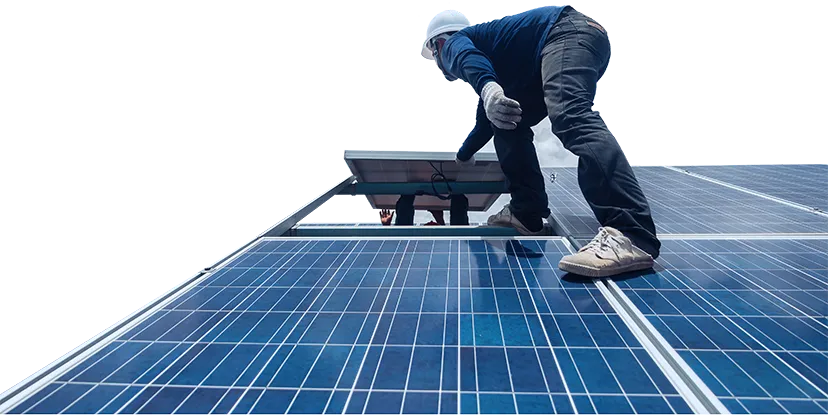
At Solar Factory, expert installation is the foundation of a reliable and high-performing solar energy system. Our experienced technicians and engineers ensure that every solar project is installed with precision, safety, and efficiency to deliver maximum energy output and long-term performance.
Skilled Solar Professionals
Our team consists of trained solar experts who have extensive experience in installing residential, commercial, and industrial solar power systems. They follow industry best practices to ensure your solar installation meets the highest quality standards.
Our Service Process
Solar Factory also provides guidance and support after installation, helping customers monitor system performance and maintain optimal efficiency.
Consultation & Site Assessment
Customized Design & Installation
Testing, Activation & Support
What papers needed for solar installation?
The identity proof of the electricity connection holder is needed for verification during the application process. Accepted documents may include:
Aadhaar Card
PAN Card
Voter ID
Passport
Driving License
How do you evaluate the cost of solar repair?
The cost of solar repair depends on several factors, including the type of issue, system size, and the components involved. At Solar Factory, we follow a detailed evaluation process to accurately identify the problem and provide a transparent repair estimate. This ensures that your solar power system continues to operate efficiently and reliably.
1. System Inspection and Diagnosis
Our technicians begin with a comprehensive inspection of the solar system, including solar panels, inverter, wiring, and mounting structures. This step helps identify the exact cause of the issue, such as reduced power output, inverter malfunction, loose connections, or panel damage.
2. Performance Analysis
We analyze the system’s performance data to determine whether the system is generating the expected amount of electricity. Monitoring tools and inverter data help us detect performance drops or irregularities.
3. Component Assessment
If a specific component such as the inverter, cables, or connectors is damaged or malfunctioning, we evaluate whether it needs repair or replacement. The condition of each component plays a key role in determining the repair cost.
4. Labor and Service Requirements
The complexity of the repair work also affects the cost. Simple fixes like cleaning panels or tightening connections may cost less, while more complex repairs like inverter replacement or electrical rewiring may require additional labor.
5. Spare Parts and Replacement Costs
If any parts need to be replaced, the cost will depend on the type and quality of the component required. We always recommend reliable and compatible components to maintain system efficiency.
6. Transparent Cost Estimate
After completing the inspection, we provide a clear and detailed repair estimate. Our goal is to ensure customers understand the issue, the required solution, and the total repair cost before any work begins.
What is the per square-feet cost of panel installation?
The cost of solar panel installation is usually calculated per kilowatt (kW) rather than per square foot. However, we can estimate the approximate per-square-foot cost based on the system size and roof area required.
Average Solar Installation Cost in India
In India, rooftop solar installation generally costs around ₹40,000 to ₹70,000 per kW depending on panel type, brand, and installation complexity.
Roof Space Requirement
A 1 kW solar system typically requires about 80–100 square feet of shadow-free roof area.
Estimated Cost Per Square Foot
Based on the above values:
Solar System Size Approx Cost Roof Area Cost per Sq Ft
1 kW ₹40,000 – ₹70,000 80–100 sq ft ₹400 – ₹875 / sq ft
Example for Homes
3 kW system → needs about 250–300 sq ft roof area
Total cost → around ₹1.5 lakh – ₹2.5 lakh depending on components and installation.
Factors That Affect Installation Cost
Several factors influence the final solar installation price:
Type of solar panels (mono, poly, bifacial)
Inverter type and brand
Roof structure and mounting system
Installation complexity and wiring
Government subsidies and incentives
Quick Summary
Average solar installation: ₹400 – ₹875 per sq ft (approx.)
Cost per kW: ₹40,000 – ₹70,000
Space required: 80–100 sq ft per kW
When should we check the battery connections?
Checking the battery connections in a solar power system is essential for maintaining safe operation and consistent energy storage. Regular inspection helps prevent power loss, system faults, and potential damage to the battery or inverter.
1. During Routine Maintenance
Battery connections should be checked as part of regular solar system maintenance. It is recommended to inspect the connections every 3 to 6 months to ensure they are secure, clean, and free from corrosion.
2. When the System Shows Performance Issues
If you notice reduced backup power, irregular charging, or warning alerts from the inverter, it may indicate loose or damaged battery connections. In such cases, the connections should be inspected immediately.
3. After Long Periods of Inactivity
If the solar system has not been used for a long time or has experienced a prolonged power outage, checking the battery terminals and connections is important before restarting the system.
4. After Extreme Weather Conditions
Heavy rain, storms, or excessive heat can sometimes affect battery terminals and wiring. A quick inspection after such conditions helps ensure the system remains safe and functional.
5. When Installing or Replacing Batteries
Whenever a new battery is installed or replaced, all connections should be properly tightened and checked to ensure correct polarity and safe operation.
6. If There Are Signs of Corrosion or Damage
Battery terminals should be checked immediately if there are signs of corrosion, overheating, loose cables, or unusual smells around the battery area.
Steps Involved in Solar Installation
1
Initial Consultation & Energy Assessment
The process begins with understanding the customer’s electricity consumption and energy needs. Our experts review recent electricity bills and discuss the suitable solar system capacity for the property.
2
Site Survey & Feasibility Check
A technical team visits the location to assess roof space, sunlight availability, roof strength, shading conditions, and electrical infrastructure. This helps determine the most efficient placement of solar panels.
3
System Design & Quotation
Based on the site survey, a customized solar system design is prepared. The proposal includes system size, panel layout, inverter details, expected power generation, and a cost estimate.
4
Installation of Mounting Structure
The installation begins with setting up durable mounting structures on the rooftop or ground surface. These structures securely hold the solar panels at the correct tilt angle for maximum sunlight exposure.
5
Solar Panel Installation
Solar panels are mounted onto the structure and connected through wiring systems to form a complete solar array.
6
Inverter Installation & Electrical Wiring
The inverter is installed and connected to the solar panels and the building’s electrical system. Proper wiring and safety protections are implemented to ensure smooth operation.
7
Net Meter Installation (If Grid Connected)
For grid-tied systems, the electricity board installs a net meter that measures both the electricity consumed from the grid and the excess power exported back to it.
8
Testing & Commissioning
The entire system is tested to ensure proper functioning, including voltage checks, inverter configuration, and power generation verification.
9
System Activation
After successful testing and approvals, the solar system is activated and begins generating clean electricity.
10
Monitoring & Maintenance
Customers can monitor their solar power generation through inverter apps or monitoring systems. Periodic cleaning and basic maintenance ensure optimal performance for many years.